Sustainability due diligence in practice
The actual due diligence process and actions needed for it vary depending on the company. For example, due diligence must be based on understanding the actual and potential sustainability impacts in a specific operating context. Because the due diligence process is risk-based, companies can prioritise to take action based on the severity and likelihood of the adverse impact. Risks, feasible controls, and appropriate levels of ambition differ across sectors, sourcing models, and leverage.
Even when a company typically manages its own operation well, many of the most serious sustainability risks arise upstream or downstream: raw materials, subcontracted work, logistics, recruitment chains, outsourced services, and higher-risk sourcing regions.
In practice, sustainability due diligence begins with an impact assessment. This assessment helps companies answer key questions such as:
- Which human rights, environmental, or economic risks are most relevant for this business model?
- Where in the value chain do these risks arise?
- Which suppliers, activities, or commodities are most closely linked to the risk?
- What leverage does the company have, and which measures are realistic?
- What information is needed to monitor progress?

Responsible business cannot rely on generic sustainability statements alone: it requires a disciplined way to identify what matters most and to act on it.
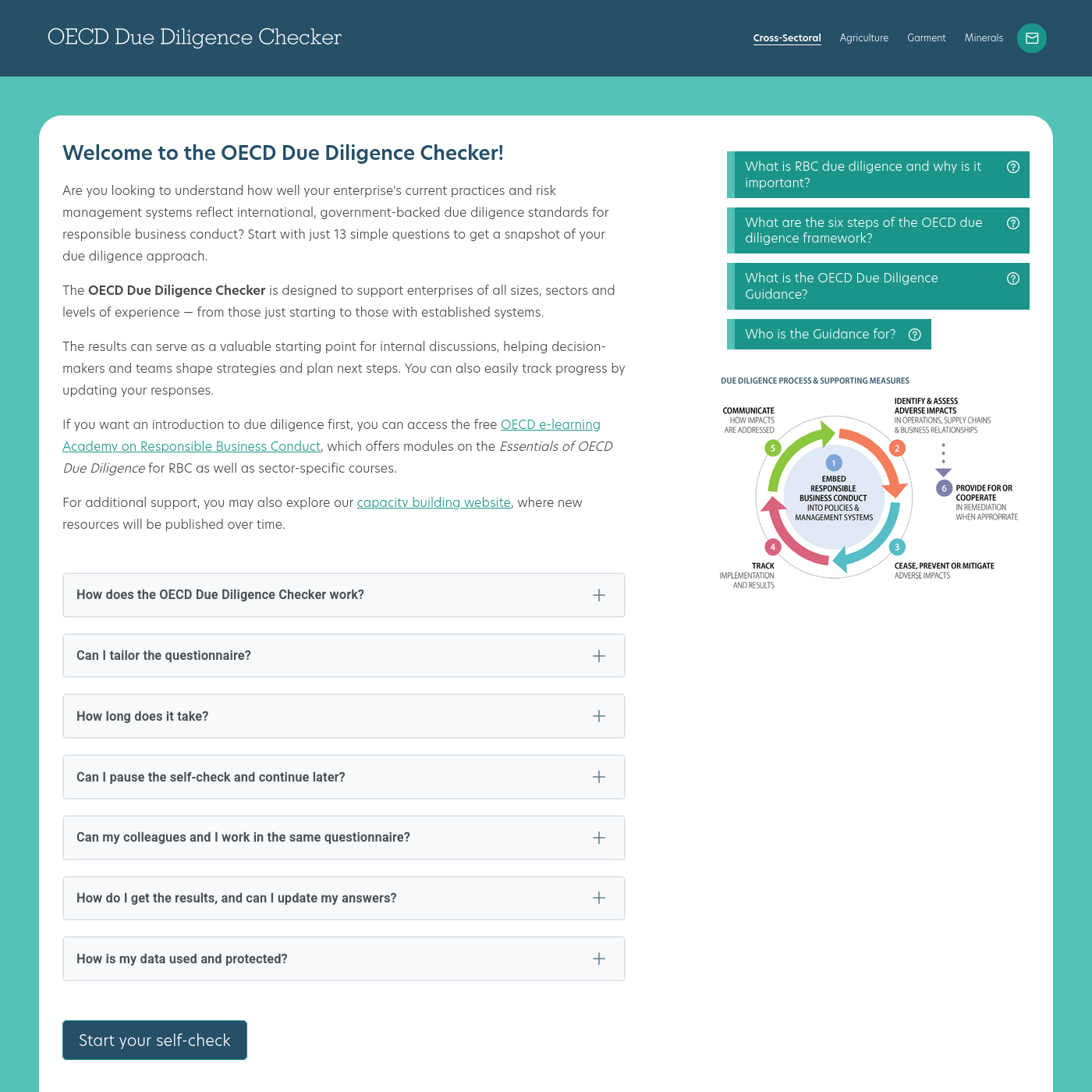
The OECD has published a Due Diligence Guidance for Responsible Business Conduct to provide practical support to companies on the implementation of the OECD Guidelines and a Due Diligence Checker as companies’ self-assessment tool.