
Why contracts are central to supply chain sustainability
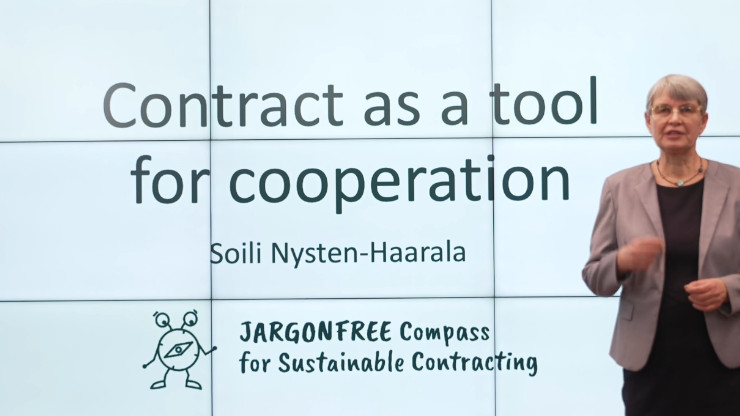
Soili Nysten-Haarala: Contract as a tool for cooperation
* embedded from the Panopto platform at Aalto University (privacy policy)Companies operate through networks of suppliers, partners and service providers. These relationships are defined by contracts. Sustainability requirements increasingly stem from regulation, including both legally binding legislation consisting of, for instance, product requirements and market access conditions, and non-legally binding international guidelines and principles, voluntary standards and market expectations. Contracts determine how these requirements are allocated and implemented across business relationships.
You can use contracts to:
- Embed sustainability into business relationships and products: Make sustainability an integral part of supply chain activities and product requirements.
- Translate sustainability goals into concrete contractual requirements: Turn high-level policies and goals into clearly defined requirements within the contract. Specify clearly what needs to be done, by whom, and based on which standards or criteria.
- Allocate responsibility: Clarify who is responsible for ensuring that these requirements are implemented, followed, and monitored across the supply chain.
- Enable verification and monitoring: Define key performance indicators, verification methods, and monitoring processes.
- Manage risk and enable remedy: Establish preventive and corrective action plans and remedies where requirements are not met.
- Build cooperation and trust: Support long-term relationships and continuous improvement.
- Enable regulatory compliance: Secure the information, cooperation and assurances needed across the value chain to meet regulatory requirements.

Contracts are not just legal documents that protect you when things go wrong.
When designed and used well, they are tools for turning goals into action and outcomes, cooperation, trust-building, and systemic change.