
Language in contracts
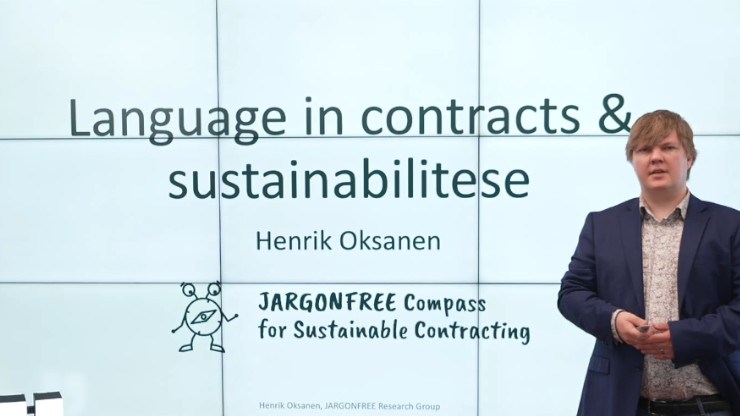
Henrik Oksanen: Language in contracts & sustainabilitese
* embedded from the Panopto platform at Aalto University (privacy policy)
When people communicate, they use language as a means to convey thoughts to one another, but they rarely share identical backgrounds, education, or language skills. Despite this fact, some kind of shared understanding needs to occur for successful communication.
The same is true for contracts: contracts are, by definition, agreements between two (or more) parties, and agreement cannot form without shared understanding. In practice, this is not always the case. Different organisations and individuals may interpret the same written clause differently, and sometimes the contracting parties choose to leave certain matters at an abstract level to allow for some leeway in the interpretation of the contract.
This can become a problem when a tendency toward abstract language and an overly rigid adherence to the language used in legal texts (for example, in sustainability matters) inadvertently keeps contractual matters at too abstract a level. This kind of language, which we call sustainabilitese, often creates an appearance of meeting sustainability expectations, but remains difficult to understand, interpret, or apply in practice. However, in order to be efficient and have an actual impact, the sustainability expectations need to be communicated with clear, understandable, and actionable language. This is why language plays a key role in contract drafting and design.