
The implementation gap
Sustainability-related content is increasingly included in contracts, (Supplier) Codes of Conduct, and Supplier Requirements, but it does not ensure that it supports implementation, guides action, or becomes embedded in day-to-day work and decision-making.
This creates an implementation gap: a disconnect between what contracts say – “words on paper” – and what happens in practice.
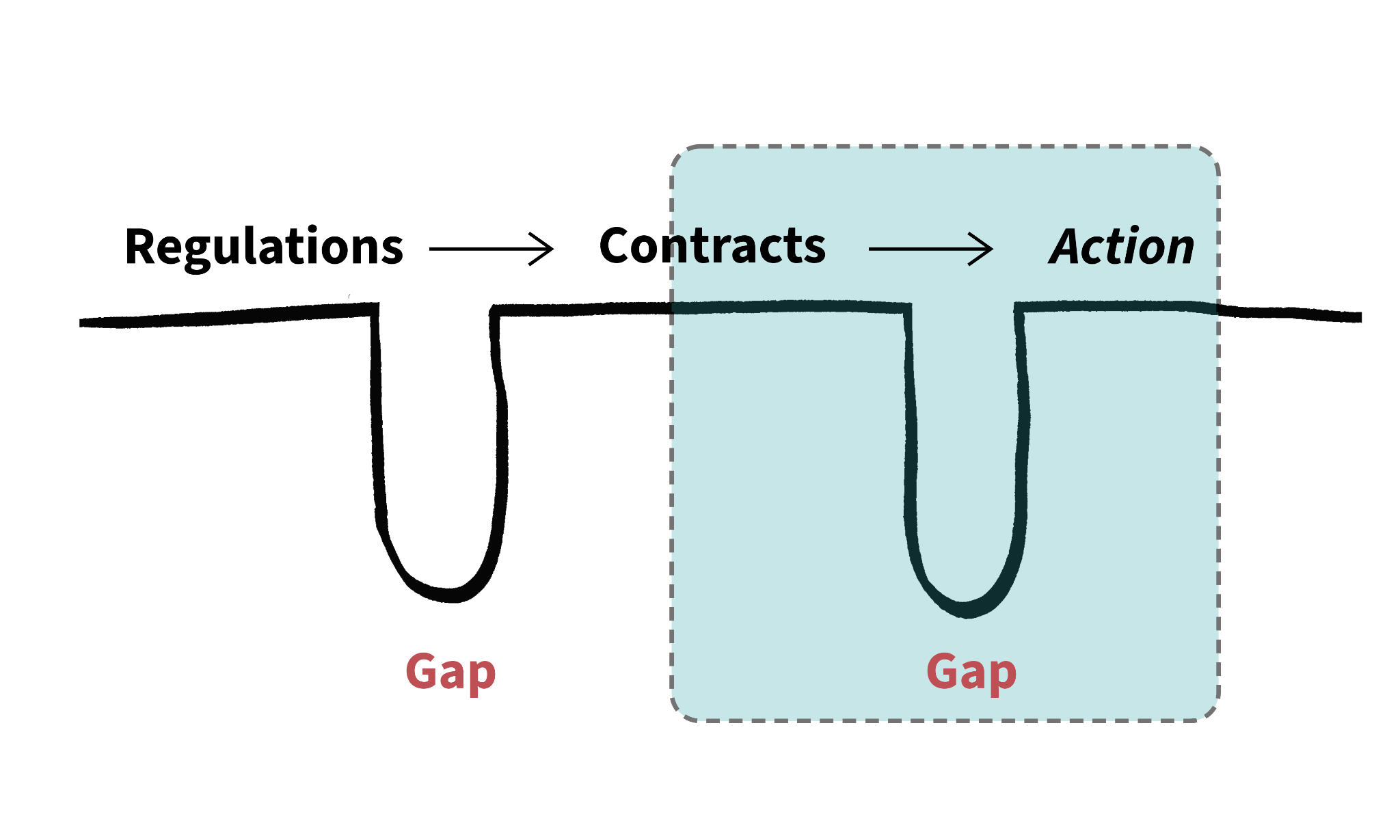
The figure illustrates how implementation gaps may arise at different points, including between regulation and contracts, and between contracts and action. In the JARGONFREE Compass, our focus is on the latter: the gap between what is set out in contracts and how it is implemented in practice.
The gap emerges when contract content remains abstract, vague, or disconnected from operational processes, roles, responsibilities, and timelines. In such cases, requirements and commitments exist on paper but fail to support coordinated action, monitoring, follow-up, or embedding into organisational processes and practices.
This is often reinforced by the use of legalese and sustainabilitese: language that may sound precise or responsible but does not provide the clarity or actionability needed to support real-world implementation. These issues are not merely drafting problems. They directly affect whether contracts can support implementation, monitoring, and sustained action.
There is no legal requirement for contracts to be written in a formal, legalistic style. Yet, this style persists, largely because templates, model clauses, inherited drafting practices and, more recently, AI and contract technology tools continue to reproduce it. Often, the result is contracts that:
- do not accurately reflect the parties’ real goals
- contain vague, unrealistic, or unmonitorable commitments or requirements
- undermine responsibility and sustainability outcomes
- create unnecessary risks, misalignment, and interpretive problems.
Many of the problems identified in this Module are not only structural or drafting-related; they also reflect underlying attitudes towards contracts and sustainability, including assumptions about what contracts are for and how they are expected to function.
Why problematic contracts persist next page