
External tools and resources
These are the key external tools and resources referenced in the Modules of the JARGONFREE Compass for Sustainable Contracting.
ISO ESG Implementation Principles (IWA 48)
Referenced in "Companies’ self-regulation" (in Module I. Contextualizing corporate sustainability).
OECD Due Diligence Guidance
Referenced in "Sustainability due diligence in practice" (in Module I. Contextualizing corporate sustainability).
OECD Due Diligence Checker
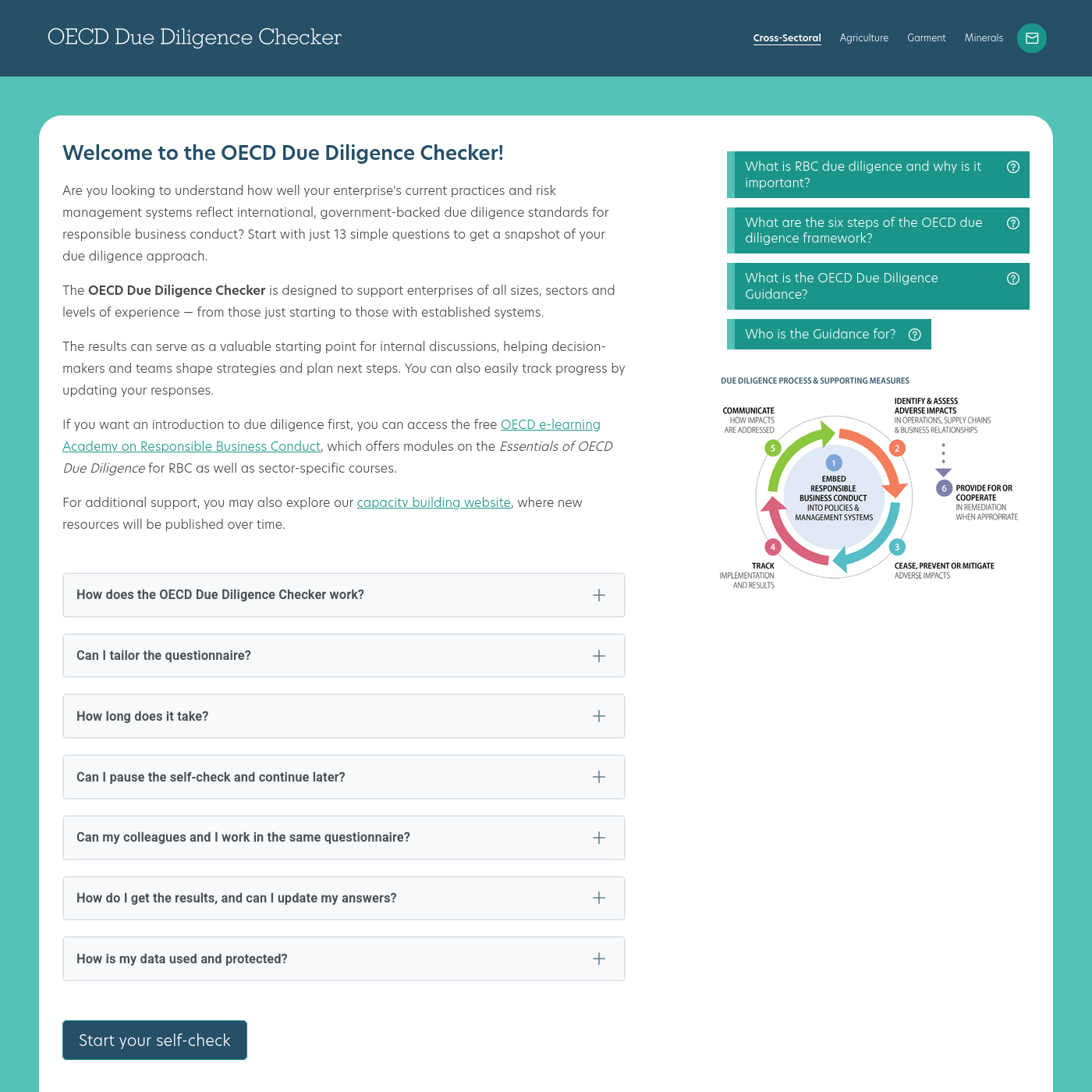
Referenced in "Sustainability due diligence in practice" (in Module I. Contextualizing corporate sustainability).
The Chancery Lane Project
Referenced in "Clause libraries and model clauses" (in Module II. Contracts as drivers of sustainability).
The Responsible Contracting Project (RCP)
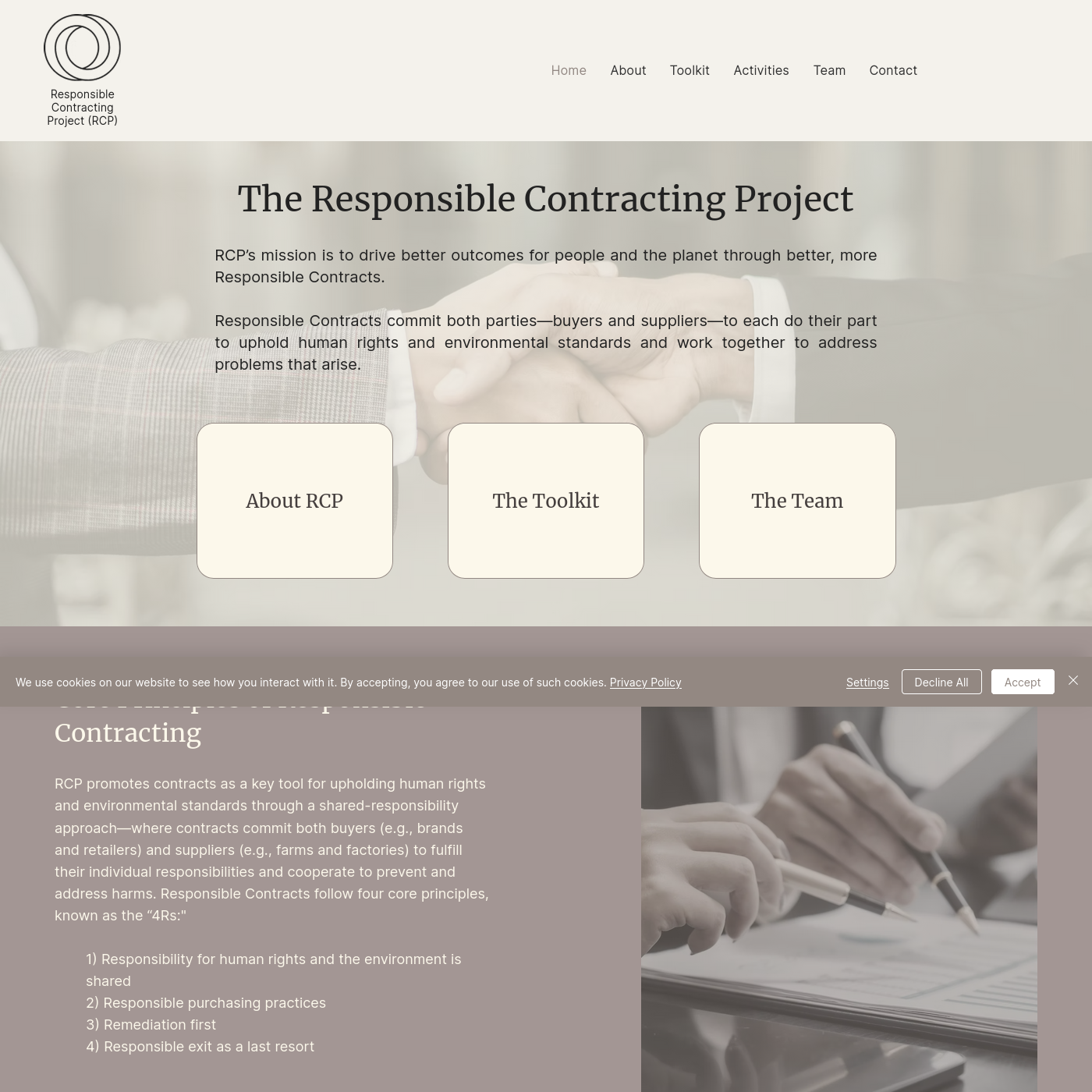
The Responsible Contracting Project (RCP) offers a toolkit with model contract clauses, explainers, and tools aligned with the UNGPs and the OECD Guidelines. Resources cover different sectors and geographic locations. Examples of model contractual clauses include
- The European Model Clauses (EMCs), drafted by the European Working Group composed primarily of European legal experts from practice and academia. The EMCs are designed to align with the CSDDD.
- The Model Contract Clauses to Protect Workers in International Supply Chains (MCCs) 2.0 that were developed by a Working Group of the American Bar Association’s Business Law Section. The model clauses are intended for buyers located in the United States.
Referenced in "Clause libraries and model clauses" (in Module II. Contracts as drivers of sustainability).
WorldCC Foundation Sustainability Clause Library
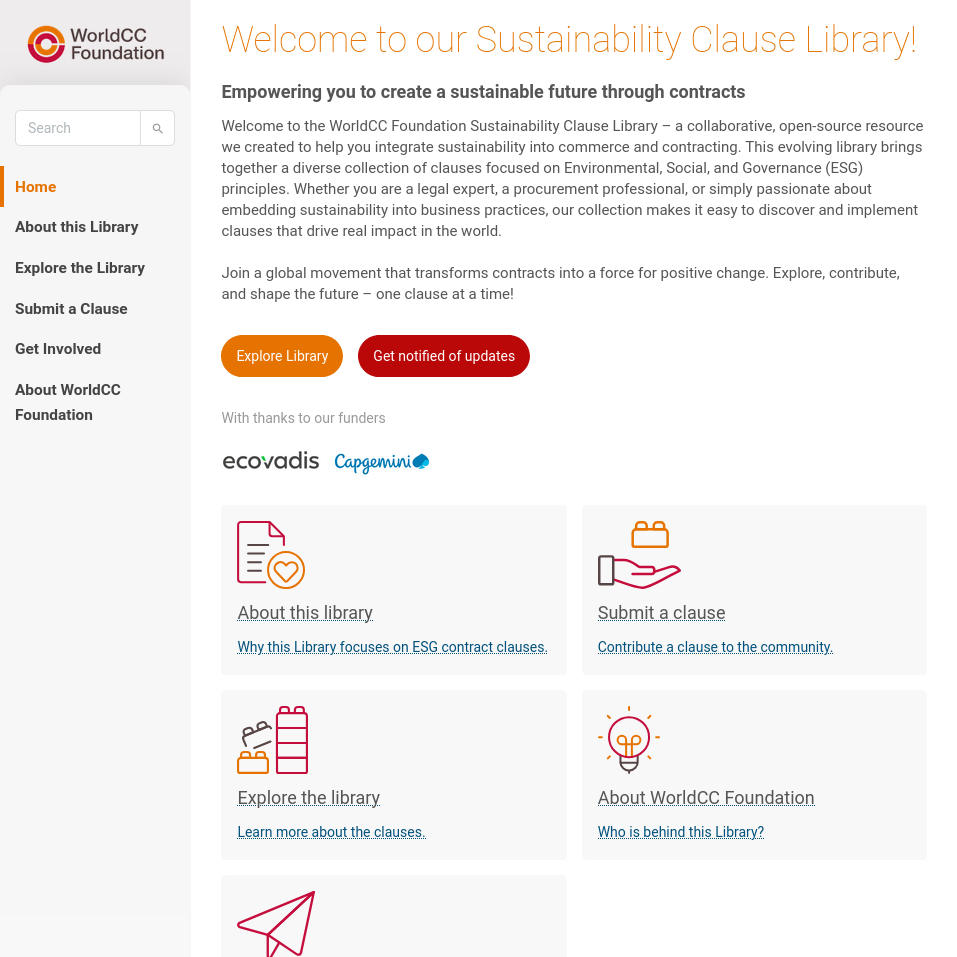
WorldCC Foundation Sustainability Clause Library is a collaborative, open-source resource that brings together sustainability clauses from a range of initiatives and contributors. While the clauses vary in style and origin, the library promotes approaches that aim to be:
- Plain: Written in direct, accessible language
- Well-designed: Structured logically with clear formatting
- Usable: Relevant to its purpose and easy to integrate
- Relational: Framed with the right audience in mind
Referenced in "Clause libraries and model clauses" (in Module II. Contracts as drivers of sustainability).
The European Commission Green Public Procurement (GPP)
Referenced in "Clause libraries and model clauses" (in Module II. Contracts as drivers of sustainability).
WorldCC Foundation Contract Design Pattern Library
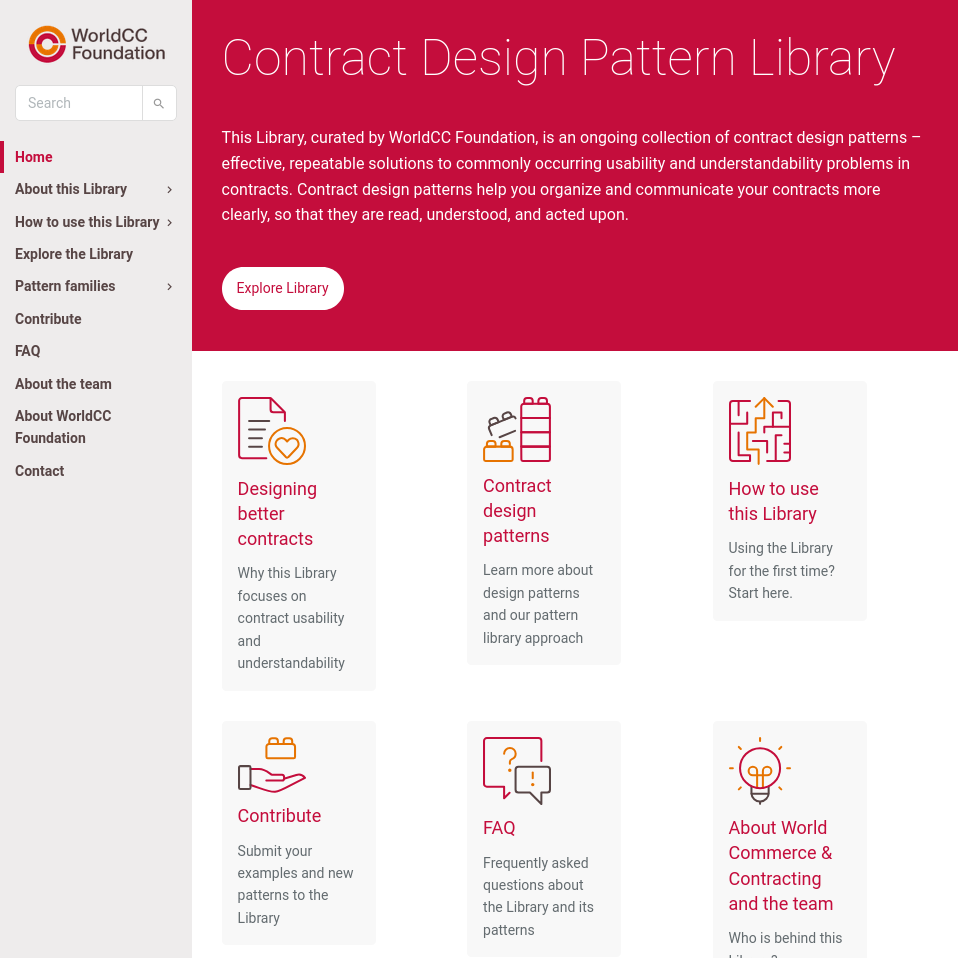
Referenced in "Contract design patterns" (in Module IV. Making contracts work).